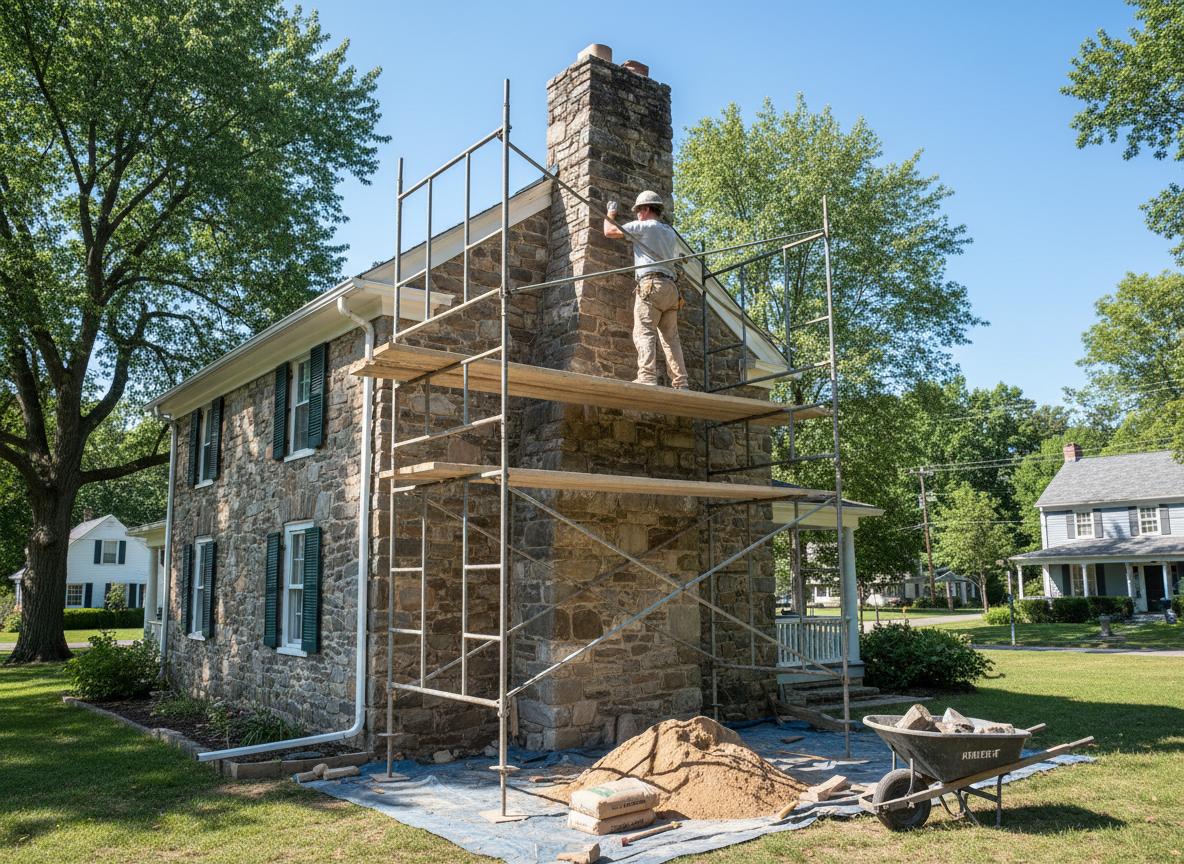
Stone chimneys in Riverton face repeated stress from the region's cold winters and hot summers. Freeze-thaw cycles in Salt Lake County push mortar out of joints on older stone stacks common in Western Springs and Harvest Park neighborhoods. Homes near Riverton City Park often show spalling where moisture enters through hairline cracks and expands when temperatures drop below freezing overnight.
Repointing requires matching the original mortar composition to avoid trapping moisture behind harder modern mixes. Crews working on chimneys in the Riverton Meadows area routinely find failed flashings where the stone meets the roofline, especially on homes built when building codes allowed less overlap. Removing loose stone and cleaning joints before new mortar application prevents water from reaching the flue liner during spring snowmelt.
Access on sloped lots common around Old Dome Meeting Hall adds setup time because scaffolding must be anchored on uneven ground. Hot summer days accelerate mortar curing, so crews adjust mix ratios and keep work areas shaded to prevent rapid drying that weakens the bond. These steps keep the stone intact through the next winter cycle without repeated callbacks.
Winter Damage Patterns
Stone chimneys in Harvest Park and Western Springs often develop vertical cracks after successive freeze events. Owners notice missing mortar pieces on the ground after storms. Addressing these early avoids full rebuilds that become necessary once water reaches the interior framing.
Technician insight
In Riverton, the thing that catches most people out with stone chimney repair is how cold winters drive repeated freeze-thaw cycles that push mortar out of joints on chimneys in Harvest Park homes built before tighter modern codes. The semi-arid summers then dry everything out fast, so mismatched repair mortar fails within a season or two.
Stone Chimney Leak in Riverton Meadows
Homeowner reported interior ceiling stains after winter storms. Inspection showed deteriorated mortar and failed flashing on the north face. Crews repointed the joints, reset loose stones, and corrected the flashing. The leaks stopped and the stone remained stable through the next freeze cycle.
How it works
- 1
Site Inspection
Technician examines the full height of the stone stack, checks mortar joints, flashing, and crown condition from the roofline down to the foundation.
- 2
Damage Assessment
Photos and notes document loose stones, eroded mortar, and water intrusion points while noting roof pitch and nearby tree cover that affects future exposure.
- 3
Mortar and Stone Repair
Deteriorated mortar is removed, joints are cleaned, and new mortar is applied to match existing color and texture. Loose stones are reset or replaced as needed.
- 4
Flashing and Sealing
Step flashing is corrected where the chimney meets the roof, and a breathable sealer is applied to finished joints to reduce moisture absorption.
- 5
Final Walkthrough
Homeowner reviews the completed work from ground level and receives care instructions for the coming seasons.
Pricing
Pricing varies with chimney height, extent of stone damage, and roof access difficulty. Upfront quotes are provided after inspection.