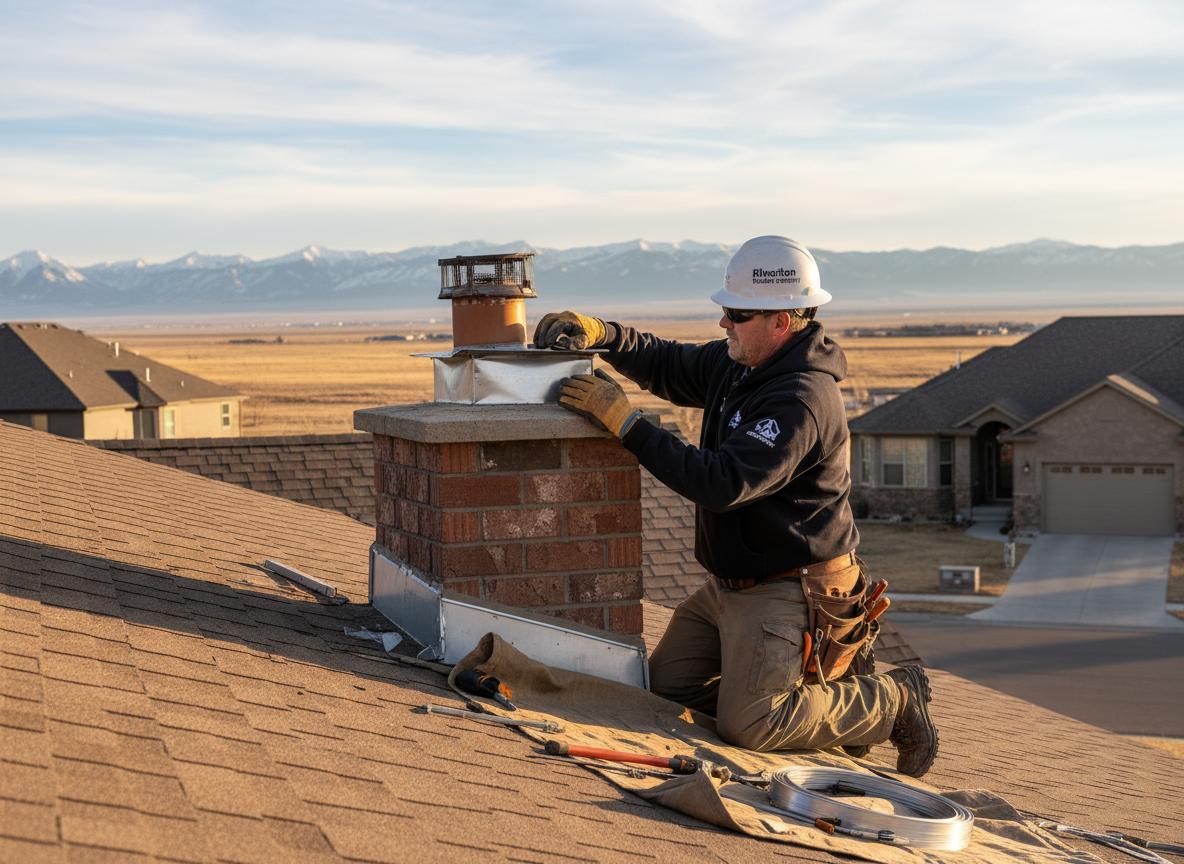
Chimney caps in Riverton face repeated stress from the region's semi-arid climate. Hot summers dry out mortar and metal while cold winters bring freeze-thaw cycles that crack flue liners and loosen cap anchors. Homes in Riverton Meadows and Western Springs often have masonry chimneys from the 1980s and 1990s where original galvanized caps have rusted through at the seams. We inspect the crown, flashing, and rain collar before replacing only the damaged sections rather than the entire assembly when possible.
Access on two-story homes near Harvest Park requires careful ladder placement on sloped roofs common in the area. Wind-driven snow can pack behind the cap and push it out of alignment, allowing water to reach the smoke chamber. We carry stainless steel and copper replacements sized for standard 8x8, 8x12, and 13x13 flues found in local tract homes. Every job includes checking the spark arrestor screen for proper fit so embers stay contained during the dry summer months.
Seasonal Considerations
Winter calls in Riverton spike after the first hard freeze when ice heaves older caps. Summer inspections catch heat expansion that loosens screws on caps near Riverton City Park and the Old Dome Meeting Hall. We route calls from nearby Draper, South Jordan, and Herriman through the same 24/7 line at 1926 W 12600 S so crews can respond the same day when water is actively entering the flue.
Technician insight
In Riverton the thing that catches most people out with chimney cap repair is how quickly wind-driven snow packs behind the cap on homes in Harvest Park and Western Springs. The freeze-thaw cycles here loosen the original screws within two winters and water reaches the smoke chamber before owners notice. Checking the crown condition while we are on the roof saves a second trip.
Rusted Cap After Early Freeze
A homeowner in Riverton Meadows noticed water stains on the living-room ceiling after the first cold snap. We found the galvanized cap had split at the seam and the crown mortar had eroded. We replaced the cap with stainless, resealed the crown, and confirmed no further water entry on the follow-up rain test.
How it works
- 1
Site Assessment
We examine the cap, crown, and flashing from the roof and interior flue to identify cracks or missing hardware.
- 2
Material Selection
We match stainless or copper replacement caps to the existing flue size and local wind exposure.
- 3
Removal and Prep
Old fasteners and sealant are cleared, and the crown is cleaned before new anchors are set.
- 4
Installation and Test
The new cap is secured, the screen is fitted, and draft is verified from below.
Pricing
Upfront quotes reflect roof access, flue size, and material choice; no hidden trip fees from our Riverton base.