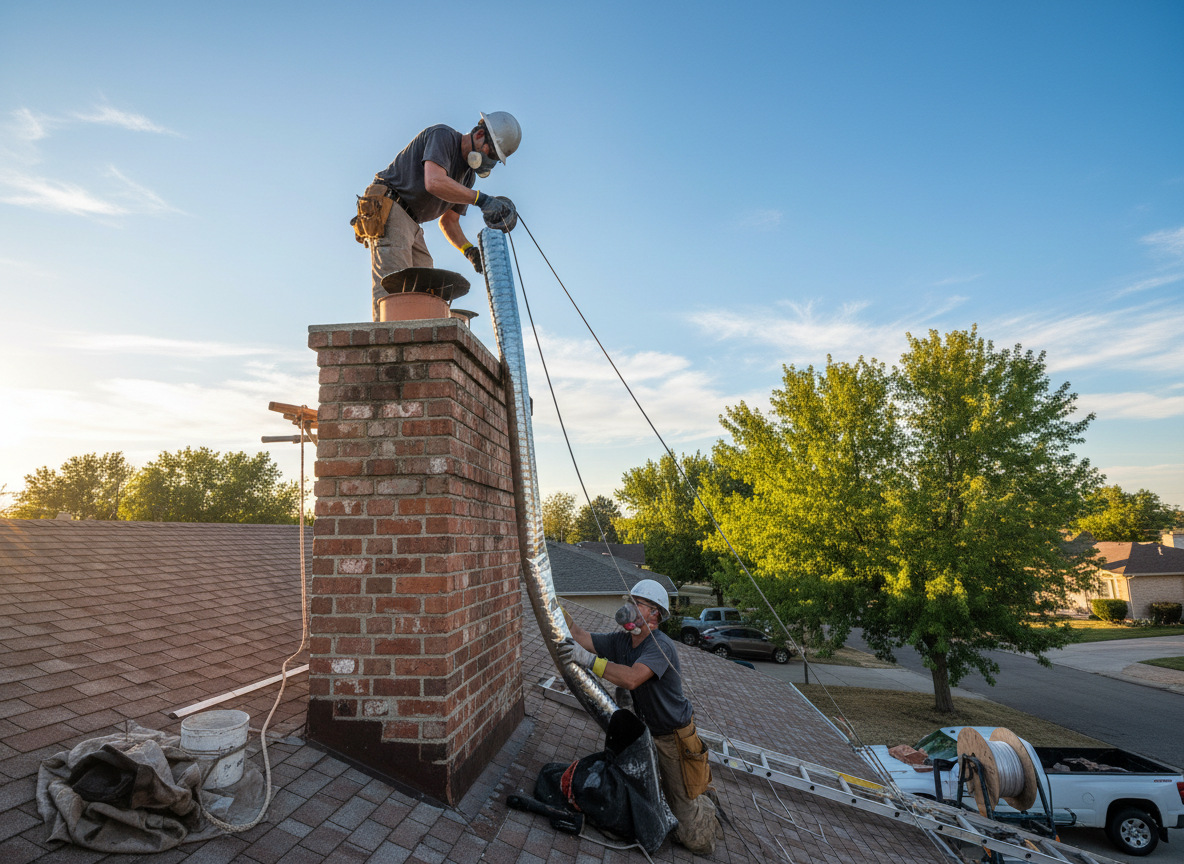
Chimney relining in Riverton addresses the damage caused by decades of freeze-thaw cycles in Salt Lake County winters. Older homes in Harvest Park and Western Springs often have unlined or deteriorated flues that allow heat and moisture to degrade mortar joints. We use stainless steel or cast-in-place liners sized to the appliance, ensuring proper draft while meeting current clearance requirements. Edge cases include tight attic spaces common in Riverton Meadows ranch homes and offsets that require custom elbows to maintain a straight flue path.
Hot semi-arid summers followed by sudden cold snaps accelerate creosote accumulation and flue cracking. Relining prevents carbon monoxide migration into living spaces, especially in two-story homes near Riverton City Park where wind patterns push smoke back down. We inspect for water intrusion from the Old Dome Meeting Hall area terrain, where runoff can saturate chimney bases. Proper relining also restores efficiency for wood-burning stoves common in South Jordan and Herriman border properties.
Winter Preparation
Schedule relining before temperatures drop below freezing to avoid ice damage inside cracked flues. We check for proper termination height above nearby roofs in Draper and South Jordan to prevent downdrafts during inversion layers typical in the valley.
Materials and Code Notes
Stainless steel liners resist the acidic condensate formed during low-burn cycles in cold weather. All work follows Salt Lake County mechanical code for liner sizing and insulation requirements.
Technician insight
In Riverton, the thing that catches most people out with chimney relining is how the rapid freeze-thaw cycles in Western Springs and Harvest Park homes crack older brick flues faster than in milder parts of Salt Lake County, often requiring insulation around the new liner to stop condensation.
Harvest Park Ranch Home
Homeowner noticed smoke backing into the living room during cold snaps. Inspection showed a cracked clay flue in a 1980s chimney. We installed a stainless steel liner with insulation to handle winter temperature swings. The system now drafts cleanly with no smoke spillage.
How it works
- 1
Initial Inspection
Camera scan of the flue to identify cracks, offsets, and creosote levels in the specific chimney.
- 2
Cleaning and Prep
Remove debris and loose material so the new liner bonds properly to existing masonry.
- 3
Liner Installation
Insert stainless steel or pour cast-in-place liner sized for the appliance venting needs.
- 4
Final Testing
Smoke test and draft verification to confirm safe operation before leaving the site.
Pricing
Cost depends on chimney height, number of offsets, and liner material; we provide upfront quotes after inspection.