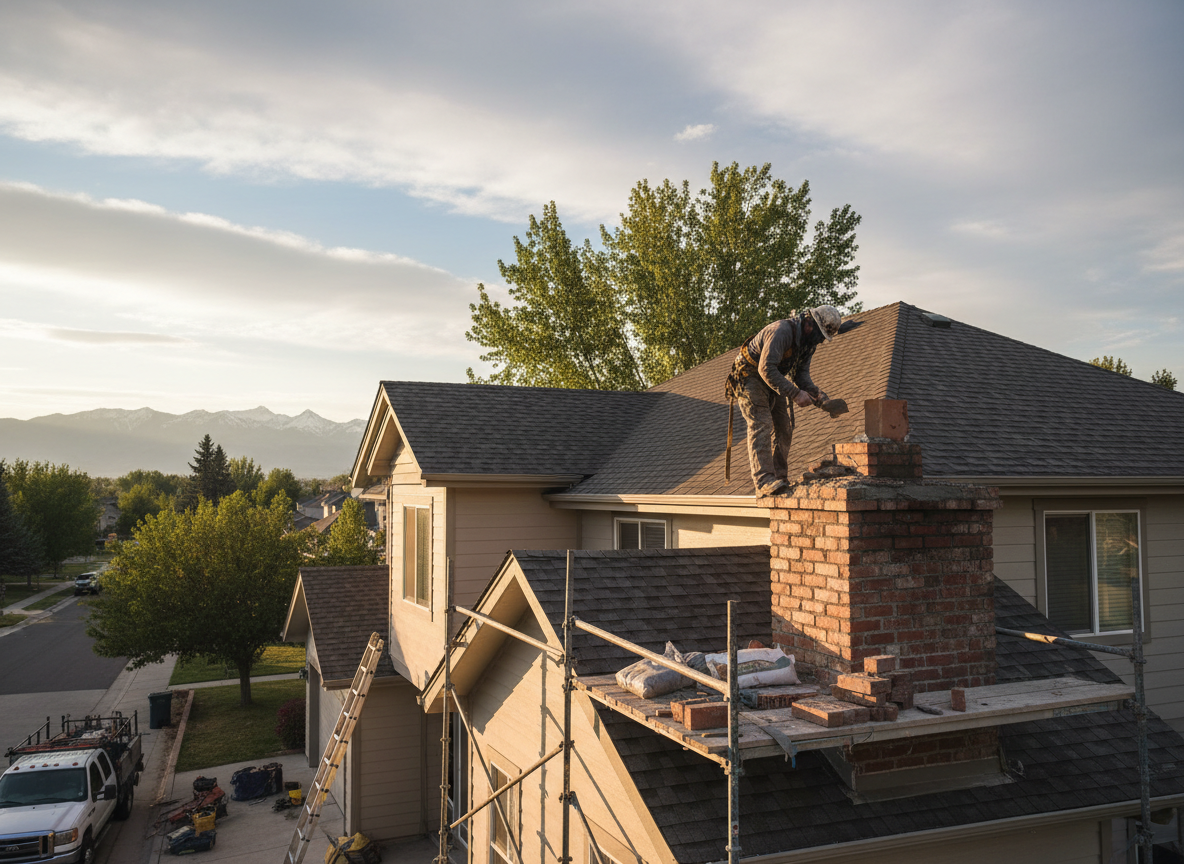
Riverton sits in a semi-arid climate where cold winters bring repeated freeze-thaw cycles that crack mortar joints and spall bricks in older chimneys. Homes in Riverton Meadows and Western Springs often date from the 1970s through 1990s and carry single-wall clay flue liners that deteriorate faster once water enters through failed crowns. Technicians must check for hidden water tracking behind the brick because the area’s low annual rainfall still concentrates damage during spring melt.
South Jordan and Herriman border properties share the same Salt Lake County soil conditions, where expansive clay can shift foundations slightly and open gaps at the chimney base. Repair crews therefore examine the flashing interface and the concrete cap before any tuck-pointing begins. Ignoring these steps lets moisture reach the attic space, especially on homes near Riverton City Park where mature trees drop debris that blocks draft and accelerates creosote buildup.
Old Dome Meeting Hall area roofs frequently use heavier clay tiles that complicate access and require different scaffolding than asphalt shingles common in Harvest Park. Crews carry both tile hooks and mortar mixes formulated for Utah’s rapid temperature swings so patches cure without shrinking. Every job ends with a smoke test to confirm draft before the homeowner resumes use.
Technician insight
In Riverton, the thing that catches most people out with Residential chimney repair is how quickly winter freeze-thaw opens mortar joints on pre-1990 homes in Riverton Meadows; the low annual rain fools owners into thinking water intrusion is not an issue until spring melt reaches the attic.
Flue Liner Separation in Harvest Park
Homeowner noticed draft loss and water stains after a heavy January snow. Inspection revealed a separated clay liner and cracked crown on a 1980s chimney. Crew rebuilt the crown, installed a stainless liner sized for the fireplace insert, and verified draft with a smoke test before leaving.
How it works
- 1
Site Inspection
Technician climbs to examine crown, flue, flashing and brick condition while noting nearby tree cover and roof pitch.
- 2
Moisture and Draft Check
Camera scan of the flue combined with a smoke test reveals hidden cracks or blockages before any repair starts.
- 3
Targeted Repair
Tuck-pointing, crown rebuild or liner insertion performed with materials matched to the existing masonry and local freeze-thaw exposure.
- 4
Final Verification
Second smoke test and visual walk-around confirm draft and water shedding before the crew leaves the property.
Pricing
Upfront quotes provided after on-site inspection; cost varies with height, liner condition and extent of masonry damage.