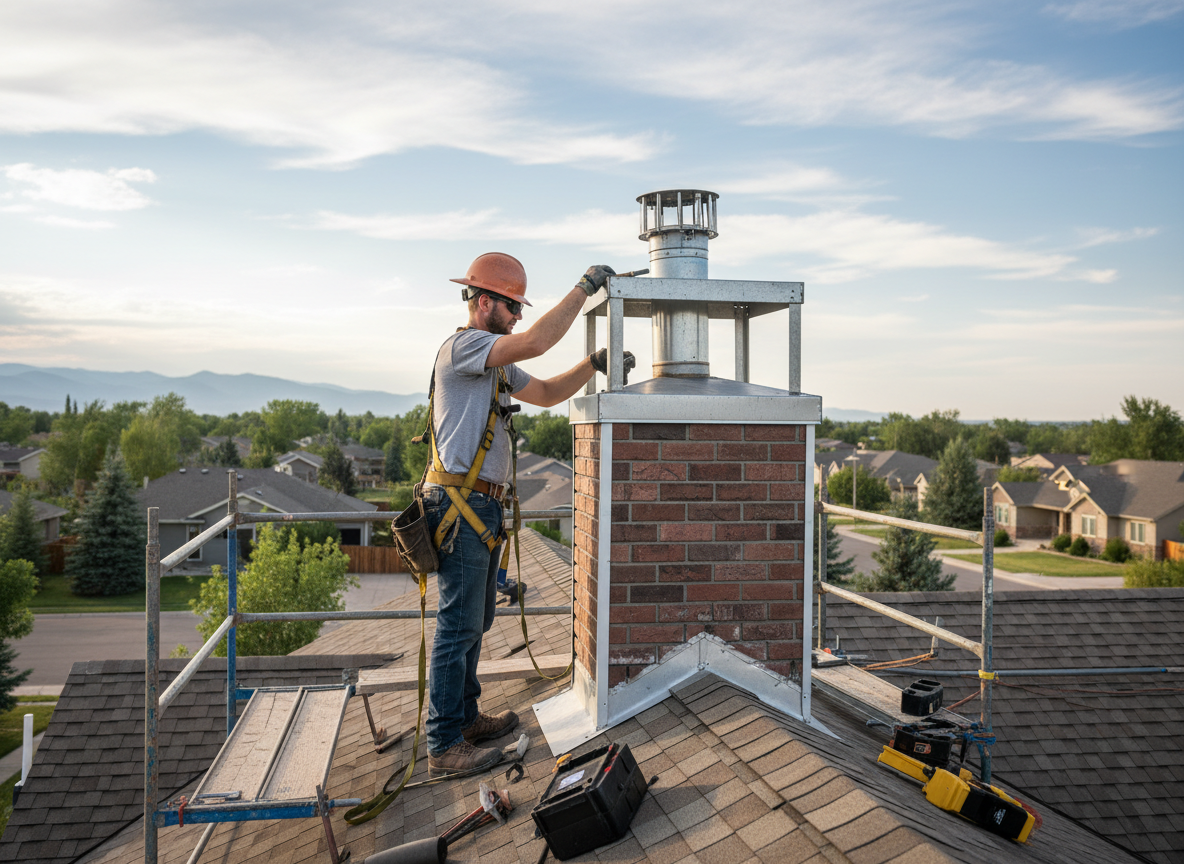
Prefabricated chimneys in Riverton Meadows and Western Springs homes from the 1980s and 1990s often use factory-built metal or masonry units set on wood-framed roofs. These systems develop cracks at the chase cap and flue joints when the semi-arid climate swings from hot summer days above 95 degrees to winter lows below 20. Salt Lake County wind loads and occasional heavy snow push additional stress on the flashing where the unit meets the roof deck. Technicians inspect the outer shell, inner liner, and support brackets rather than assuming the problem is only visible spalling.
Cold winters in Harvest Park drive most calls because repeated freeze-thaw cycles loosen the cement board or metal seams around the chimney. Homeowners near Riverton City Park or the Old Dome Meeting Hall notice water stains on ceilings after spring thaws when melting snow enters through failed seals. Repair work here requires removing the damaged section, installing new high-temp sealant rated for 2000-degree exposure, and re-securing the rain cap with stainless screws to handle gusts that sweep across the valley floor from the west.
Draper and South Jordan properties share the same soil and slope conditions that cause minor settling under the chimney base. When the prefabricated unit shifts even a quarter inch, the flue liner loses alignment and creates draft problems. Crews check the anchor points at the roof line and the cleanout door fit before any patch work. This step prevents repeat visits that occur when only the exterior is addressed.
Technician insight
In Riverton the thing that catches most people out with prefabricated chimney repair is the hidden movement at the roof deck anchors. Homes in Western Springs and Harvest Park sit on clay-heavy soil that shifts slightly each winter. When the base moves, the metal sections pull apart even if the exterior still looks straight. Checking those anchors first saves the job from failing again after the next freeze.
Harvest Park Prefab Chimney Leak
Homeowner noticed ceiling stains after a March thaw. Inspection found the prefabricated unit base had shifted on the sloped roof deck common in that neighborhood. Crew replaced the damaged lower section, resealed the flashing, and tightened the anchors. Draft tested clear with no further water entry during the remaining spring storms.
How it works
- 1
Initial Inspection
Technician climbs to the roof and examines the chase, liner, and flashing on the specific prefabricated model installed in the home.
- 2
Component Assessment
Check expansion joints, cap, and base anchors for movement caused by local freeze-thaw cycles and wind exposure.
- 3
Targeted Repair
Replace damaged sections with manufacturer-matched parts, reseal joints, and secure all connections against Salt Lake County weather.
- 4
Final Test and Documentation
Run a draft test and provide photos of the completed work for the homeowner record.
Pricing
Upfront quote after on-site inspection of the specific prefabricated model and roof access conditions.