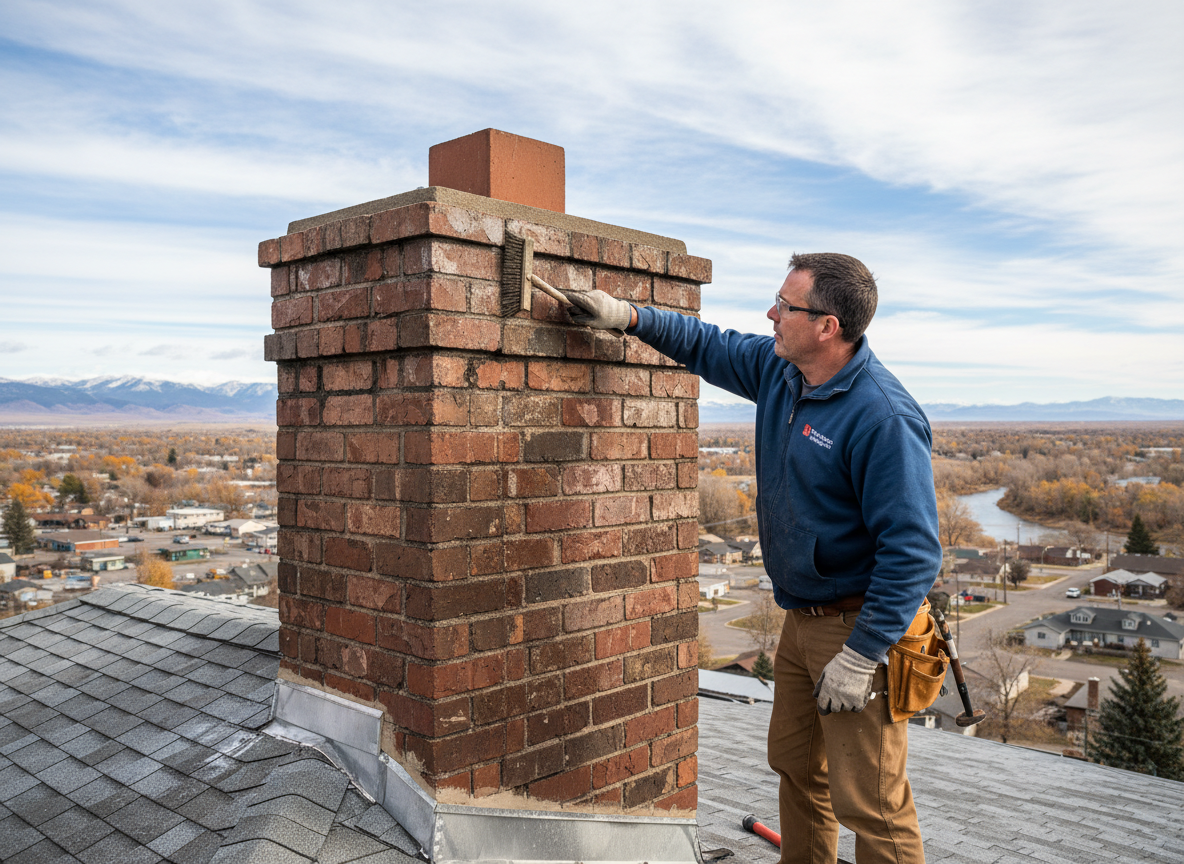
Riverton's cold winters bring repeated freeze-thaw cycles that force water into mortar joints and flue liners on chimneys built before modern flashing standards. Homes in Riverton Meadows and around Old Dome Meeting Hall often have single-wythe brick stacks exposed to wind-driven rain from the west. A quality waterproofing treatment uses breathable silane-siloxane sealers that penetrate the masonry without trapping moisture inside the flue, preventing spalling that shows up first on the north-facing side after a hard January freeze.
South Jordan and Herriman homes share the same Salt Lake County soil conditions where expansive clay holds water against foundations and chimney bases. When summer monsoons hit followed by rapid cooling, unsealed chimneys wick moisture upward into the attic. Proper application requires scaffolding on the steeper roofs common in Western Springs, plus masking of nearby cedar shingles and metal flashing at the Old Dome Meeting Hall style historic properties to avoid staining.
Technicians start by checking for existing cracks wider than 1/8 inch and any crown deterioration caused by the intense summer UV here. Two coats are applied only after the masonry has dried for at least 48 hours following any pressure washing. The sealer must be reapplied every five to seven years because the alkali in local brick eventually breaks down the surface layer, especially on chimneys that vent wood-burning inserts used during inversion events.
Technician insight
In Riverton the thing that catches most people out with chimney waterproofing is the wind-driven rain that hits the west face hardest during summer storms, then freezes solid in January. Homes in Western Springs with chimneys built in the 1980s often have hairline cracks that look fine until the first hard freeze expands the trapped water and pops the brick. Skipping the second coat or using a film-forming product instead of a penetrating sealer is the mistake that shows up two winters later as spalling right above the roofline.
Water Staining in Harvest Park Attic
Homeowner noticed brown streaks on ceiling joists after a late-October rain. Inspection revealed open mortar joints on the north side of the chimney where wind had driven water under the flashing. We cleaned the stack, applied two coats of penetrating sealer, and sealed the crown edge. No further staining appeared the following winter.
How it works
- 1
Initial Inspection
Technician climbs to examine crown, flashing, and mortar from the roofline at the Riverton address, noting any prior repairs or water staining visible from the attic.
- 2
Surface Preparation
Loose debris and efflorescence are removed by hand brushing; areas around Harvest Park homes with heavy lichen growth receive a mild biocide wash before rinsing.
- 3
Sealer Application
Breathable silane-siloxane sealer is rolled and brushed into all four sides in two coats, with extra attention to the south and west faces that receive the most sun and wind.
- 4
Final Check and Documentation
After 24 hours cure time, photos are taken and the homeowner receives a written record of the product batch used and recommended reapplication interval.
Pricing
Upfront quotes provided after on-site inspection; price varies with chimney height, number of sides accessible, and any prep work needed for older brick in Riverton.