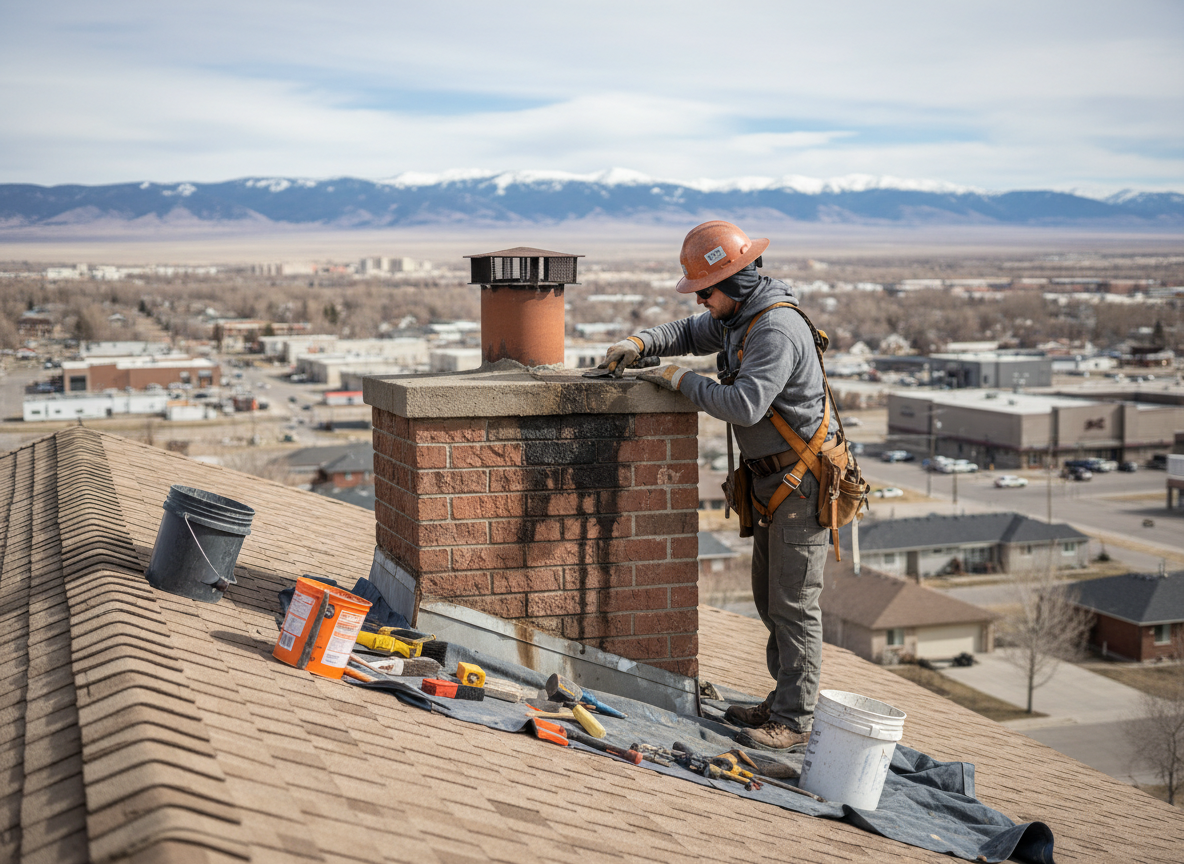
Riverton sits in Salt Lake County where hot dry summers bake masonry and cold winters drive repeated freeze-thaw cycles that open mortar joints and separate flashing from brick. Homes in Riverton Meadows and Western Springs often have chimneys built with standard clay flue liners and single-layer step flashing that fails first at the rear slope where snow drifts longest. Water that gets past the crown runs down the flue or behind the brick, staining ceilings in second-floor bedrooms before homeowners notice the source.
In Harvest Park and near Old Dome Meeting Hall, many chimneys serve mid-1990s homes with limited attic access, so leaks frequently travel along rafters into interior walls rather than dripping straight down. We use stainless steel flashing, high-temp silicone sealant rated for 500-degree exposure, and hydraulic cement at the crown to match the thermal movement common here. Skipping proper counter-flashing or using standard caulk leads to repeat calls after the next snow load.
Ignoring a small leak allows moisture to reach the firebox and damper assembly, accelerating rust and creating draft problems once temperatures drop below freezing. We always check the condition of the clay liner and the intersection with the roof deck before closing up, because terrain runoff from the benches above Riverton can push extra water against south-facing roofs during spring melt.
Seasonal Guidance
Check chimneys after the first hard freeze in November and again after March melt. Clear debris from the crown and inspect flashing seams visible from a ladder before heavy snow returns. Homes near South Jordan and Herriman share the same wind-driven rain patterns that push water under loose flashing on the west side of chimneys.
Technician insight
In Riverton, the thing that catches most people out with chimney leak repair is how the freeze-thaw cycle on older brick in Riverton Meadows opens the crown mortar every winter, then summer heat dries it so the next snowmelt finds a new path behind the flashing that standard roofers miss.
Persistent Leak After Winter Snow
Water stains appeared on a ceiling in a Harvest Park home following heavy January snow. Inspection showed cracked crown mortar and lifted flashing on the north side. We repointed the crown, installed new stainless step flashing, and sealed the joints. The homeowner reported no further moisture after subsequent storms.
How it works
- 1
On-Site Assessment
We examine the crown, flashing, and interior chase from the attic to locate active water paths in the specific roof pitch common to Riverton homes.
- 2
Source Isolation
Dye testing and moisture meters confirm whether the leak originates at the crown, step flashing, or liner joint before any material is removed.
- 3
Targeted Repair
We replace or reseal flashing with corrosion-resistant metal, repoint mortar joints, and apply appropriate sealant rated for Utah temperature swings.
- 4
Verification and Cleanup
A water test confirms the repair, followed by attic cleanup and a written report noting any additional chimney needs for the homeowner.
Pricing
Pricing varies with chimney height, roof access, and extent of flashing or crown damage; we provide a written estimate after inspection.