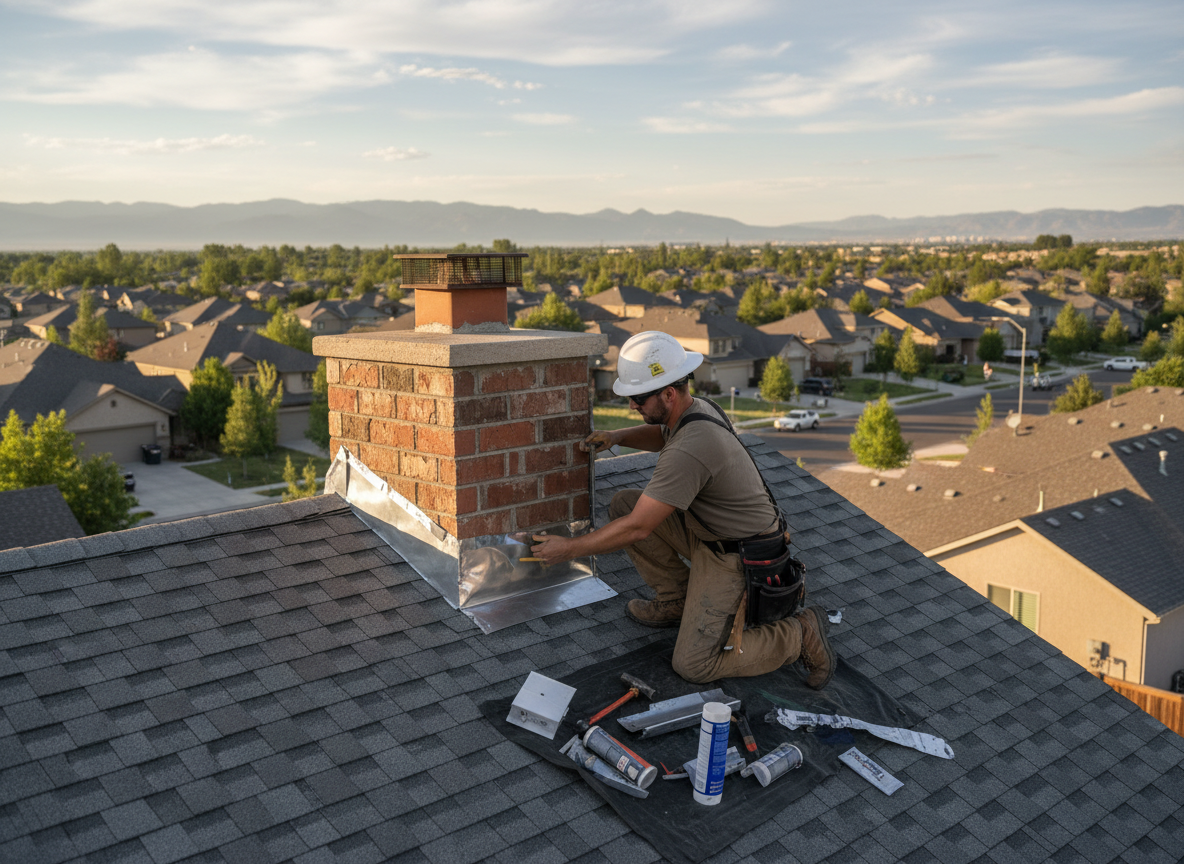
Riverton homes built in neighborhoods like Western Springs and Harvest Park often have brick or stucco chimneys where step flashing meets the roof. Semi-arid conditions bring wide temperature swings that expand and contract metal flashing, cracking sealant and letting meltwater enter attics. Older stock near the Old Dome Meeting Hall shows the most wear because original lead or galvanized flashing has corroded after decades of exposure.
Proper repair uses copper or stainless step flashing tucked under shingles with a counter flashing apron sealed into mortar joints. We check for ice dam damage common on north-facing roofs in Riverton Meadows and ensure new flashing clears the roof plane by at least two inches to handle heavy spring runoff. Skipping the counter flashing or using cheap butyl tape instead of proper mortar tuck leads to repeat leaks within two seasons.
Access on single-story homes in Harvest Park is straightforward, but two-story homes near Riverton City Park often require scaffolding on sloped yards. We always pull the bottom row of shingles to inspect decking for rot before reinstalling, because water trapped behind failed flashing frequently damages sheathing in this climate.
Seasonal Considerations
Cold snaps followed by rapid warming in Salt Lake County push water under any gap in flashing. Summer heat bakes sealant on south and west exposures, so we specify high-temperature rated materials rated for 200-plus degrees.
Technician insight
In Riverton, the thing that catches most people out with chimney flashing repair is how freeze-thaw cycles on the west side of homes in Western Springs push water under the apron when the original flashing was only surface-sealed instead of properly stepped and counter-flashed.
South-Facing Flashing Leak in Harvest Park
Homeowner reported ceiling stains after spring melt. Inspection showed cracked sealant on the south chimney flashing where summer heat had baked the old material. We removed the damaged sections, installed new copper step flashing with counter flashing tucked into the mortar, and replaced affected shingles. The attic stayed dry through the next winter.
How it works
- 1
Site Assessment
We inspect the chimney, roof intersection, and attic from the address at 1926 W 12600 S and note any prior repairs or rot.
- 2
Material Removal
Old flashing is cut out and shingles are lifted to expose the decking without damaging surrounding roof surfaces.
- 3
New Flashing Installation
Step flashing is woven into the shingles and counter flashing is mortared into the chimney with proper weep holes.
- 4
Final Seal and Test
All seams receive high-temperature sealant rated for our temperature swings and the area is checked with a water test.
Pricing
Cost depends on roof pitch, stories, and extent of any rotted decking; we provide an upfront quote after inspection.